A German engineering office with its own quality team inside the plants it buys from. Small enough that you speak to the person who reviewed your data, large enough to hold a supply chain together when the market tightens.
LEXINGTON® Europe GmbH was founded in 2012 and has been active in the printed circuit board industry for over twenty years. We are not a plant and we do not pretend to be one. We are a German engineering office that specifies, qualifies and controls PCB production in certified plants in Asia — with our own technical presence in China: CAM, QA and supply chain people on site rather than an inbox and a hope.
That structure is the whole proposition. A trading company sends your data on and forwards whatever comes back. A plant sells you its own process and its own limits. We sit in between: we choose the plant that fits the board, we review the data before it goes anywhere, and when something is wrong at the manufacturing site there is somebody of ours standing next to it.
The work is exclusively PCBs. No connectors, no passives, no assembly. That focus is why an enquiry gets a technical answer rather than a catalogue number, and why the answer usually arrives within a working day.
Within that focus the work concentrates where the requirements are hardest: automotive electronics, sensor technology, ceramic substrates, lighting and LED, and RF and 5G applications. Those are the fields that decide what our specification has to cover, which plants are worth qualifying and which characteristics get measured rather than assumed.
Engineering-driven, from prototype to series
[ Approach ]
We manage projects with an engineering mindset: critical characteristics identified early, structured processes, and technical support that does not stop at the first sample.
01
Technical responsibility from the start
We take a position on your data rather than passing it through. If a build-up will not hold, you hear it before tooling, not after the first article.
02
Critical characteristics identified early
What matters is flagged during quoting and written into process planning, rather than discovered during a capability study.
03
Structured quotation and series process
Clear steps from specification to series release, with documented validation and a controlled ramp-up.
04
Support that continues past the sample
From first sampling through series validation to stable, on-time delivery — the same people throughout.
05
Reproducible results
Statistical process monitoring with a CpK target of 1.67 on critical characteristics — the level that corresponds to stable automotive series production.
Goal: permanently stable series production.
Hilden site
[ Location ]
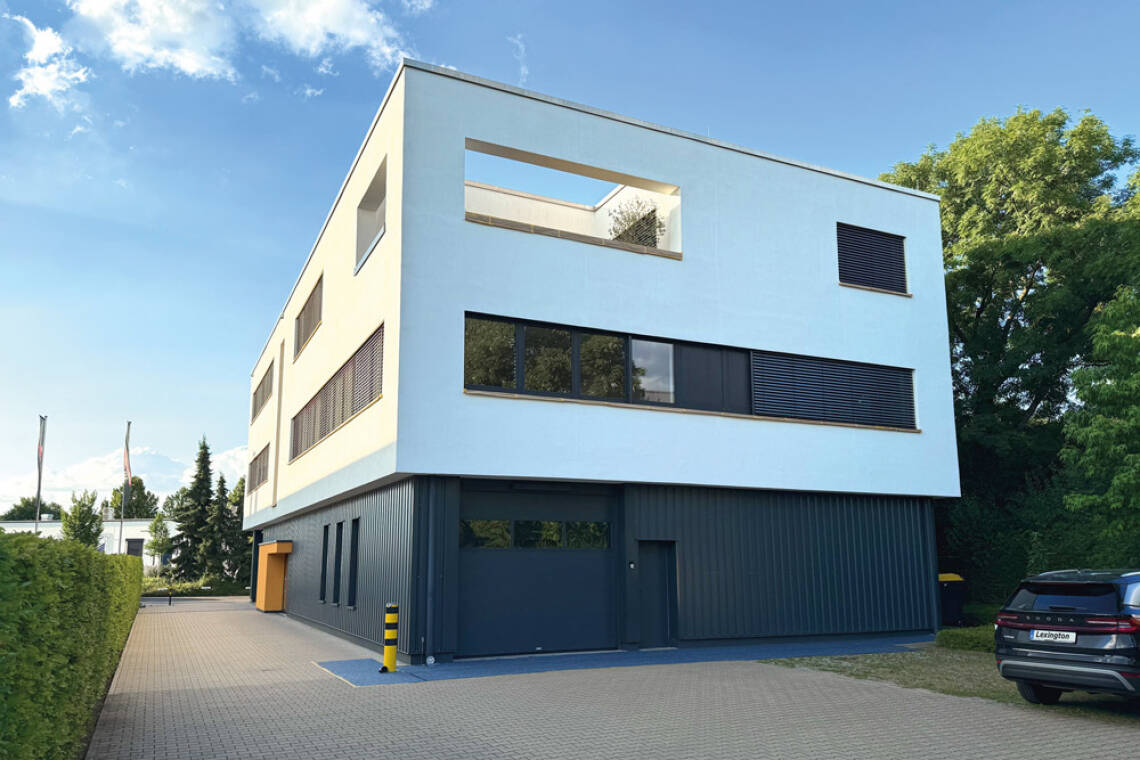
Everything commercial and everything technical sits in one building near Düsseldorf. Enquiries, data review, quality questions and logistics are handled by the same eight people, which is why a technical question rarely needs a second email.
Address
Bernshausstraße 11, D-40721 Hilden
Region
Rhine-Ruhr, near Düsseldorf
Functions
Engineering, CAM review, sales, logistics
Warehouse
Own stock in Germany
Languages
German, English
Hours
Mon – Fri, business hours CET
[ Location ]Own warehouse infrastructure in Germany means series call-offs can be buffered locally rather than waiting on a container.
The people you deal with
[ Team ]
Eight technical specialists rather than a support tier. The roles below are the ones you will actually encounter on a project — named contacts are given with the first quotation.
01
Engineering & CAM review
Checks your data against the intended build before tooling, and comes back with the specific problem rather than a generic rejection.
02
Quotation & project management
Owns the enquiry end to end, including the plant selection and the schedule you were promised.
03
Quality assurance
Handles acceptance criteria, inspection reports, complaints and 8D. Works directly with the QA team on site in the plant.
04
Supply chain & logistics
Call-offs, stock in Germany, freight mode and the honest answer about what a date actually means.
Plants, selection and control
[ Supply chain ]
We do not own a plant. We own the specification, the plant selection and the people standing in it — which in practice is what determines whether a board comes out the way it was drawn.
01Selection and audit
Plants qualified against the technology, not just the price
On-site audit before the first series order
Capability matched to the board rather than the other way round
Second source qualified where volume justifies it
02The LEXINGTON® specification
Our own delivery specification on top of the plant standard
Acceptance criteria fixed to IPC-A-600 Class 2 or 3
Build-up, material and finish recorded in full
No silent substitution of any of them
03Control on site
Own CAM, QA and supply chain team in China, inside the plant
Technical quality assurance at the point of manufacture
Issues raised in the plant, not discovered on your line
Same time zone as production, which shortens every loop
04Logistics and stock
Own warehouse infrastructure in Germany
Sea freight delivered, air freight ex-works on request
Series call-offs buffered from German stock
Delivery dates that account for the whole chain, not just the plant
Quality
[ Quality ]
Every claim we make should be one we can put a document behind. In practice that means:
Area
What we do
Evidence
Quality system
ISO 9001, IATF 16949-oriented processes
Certificates on request
Process capability
Statistical monitoring, CpK target ≥ 1.67
CpK report per lot on request
Acceptance
IPC-A-600 Class 2 or 3 as specified
Inspection record
Electrical test
100 % electrical test on every board
Standard, documented
Cross-section
Barrel quality and plating thickness
Microsection report on request
Impedance
TDR coupon measured per panel
Measurement report
Sampling
PPAP support at the required level
Full submission package
Complaints
Structured 8D with containment and root cause
8D report
A deliberate habit of saying which certificate sits with us and which sits with a partner plant. That distinction comes out in an audit anyway.
Six Sigma
[ Method ]
Six Sigma is how we think about quality: a process is only good when its results are consistent, measurable and repeatable, lot after lot. For us it is both a way of working and the standard our results are measured against. In practice it comes down to four habits, and none of them is exotic — they are simply done before the first article rather than after the first complaint.
01
Critical characteristics first
Which dimensions actually decide whether the board works are agreed at data review, not discovered in the field. Everything downstream — what gets monitored, what gets a report — follows from that list.
02
The measurement before the process
A capability figure is only as good as the gauge behind it. Measurement systems are checked for repeatability first, because a process that looks unstable is sometimes just a measurement that is.
03
Monitoring on the line
Statistical process control runs during production at the plant, where a drift can still be corrected — rather than as a report assembled afterwards, when it can only be explained.
04
A structured route for what falls out
What escapes goes into a structured 8D with an immediate action and a root cause. The discipline is the same one Six Sigma teaches: fix the process that produced it, not just the lot.
Compliance and material transparency
[ Compliance ]
Material data is prepared in-house rather than requested from a plant three time zones away when your deadline is tomorrow.
IMDS datasets
Prepared by us, for the actual build rather than a generic entry.
REACH & RoHS
Compliant material selection with declaration of conformity per delivery.
PFAS status
Documented for the materials in the build, as the regulatory position develops.
Halogen-free options
Material concepts to IEC 61249-2-21 where the application or policy requires it.
CMRT / EMRT
Conflict minerals and extended minerals reporting on request.
Traceability
Audit-ready, per lot, back to laminate batch and plant.
Sustainability
[ Responsibility ]
We would rather state what we actually influence than publish a target we do not control. As an engineering office buying from partner plants, our leverage sits in three places.
Material selection
Halogen-free material concepts where the application allows, REACH and RoHS compliant selection as standard, and documented PFAS status as the regulation develops.
Plant requirements
Environmental management is part of how we assess and audit a plant, not an afterthought. ISO 14001 is a selection criterion where the application calls for it.
Getting it right first time
The most wasteful thing in this industry is a scrapped production run. Data review before tooling, and a design conversation before layout freeze, are also environmental measures — they just do not look like one.
[ Responsibility ]Where a customer needs a specific environmental certificate or reporting standard, tell us which one — we will say plainly whether we can document it today or not.